At MSMS, what may seem like small student interactions or everyday habits often become lasting traditions.
Well-known MSMS traditions, such as the annual Tales from the Crypt performances and the publication of the Southern Voices literary magazine, have been upheld for years. Beyond that, other unspoken rules and traditions have also been quietly passed down from one generation of students to the next. Many of the traditions students follow now date back to when several of today’s teachers were themselves students at MSMS.
MSMS has long upheld the tradition of emissaries, selected seniors who serve as official student ambassadors, mentors and recruiters. English teacher Theo Hummer, a 1995 MSMS graduate, said emissaries existed during her time as well, primarily to help incoming juniors transition into the school. However, the campus also had a separate tradition called Secret Senior, which served a similar purpose at the start of the year. In Secret Senior, each senior was assigned a junior and would anonymously give them gifts throughout the year, with the reveal happening at the end. Hummer said she remembered receiving gifts during her junior year and later returning the favor as a senior.
“Your Secret Senior was like an extra person who was giving you some happiness from time to time in those days,” Hummer said. “Everybody had a mailbox over in Hogarth … so frequently, your secret senior would give you your presents there.”
Counselor Heath Stevens, a 2001 MSMS graduate, said serenades were a common occurrence during his time at the school. While students now will occasionally bring a speaker outside on Friday nights to dance and sing, Stevens said it rarely compares to the frequency and spirit of serenades he experienced. The close proximity of former dorms like Peyton and Fant also encouraged the tradition, making it easier for students to connect with one another.
“Maybe once a semester, you would have this thing where the guys would sing songs to the girls or sometimes vice versa,” Stevens said.
MSMS English teacher Thomas Richardson, who graduated from MSMS in 2004, said he had a similar experience with the serenading tradition.
“There used to be, at the beginning of the year, this serenade idea where you would either write or rewrite a song and then sing it to the other dorm … a guy’s dorm would do it and a girl’s dorm would do it either the same day or a different day,” Richardson said.
Serenades were also commonly used to honor teachers leaving the school as a form of send-off. Stevens said he enjoyed joining his classmates in serenading the Director of Academic Affairs, Janet Hugo, upon her departure from MSMS.
“We sort of caught her when [his classmates] knew she was going to come out of the cafeteria, which is close to where our residence halls are,” Stevens said. “We caught her and serenaded her with … something like the Backstreet Boys songs or something like from a long, long time ago, but it was pretty funny.”
As a boarding school, MSMS takes birthday celebrations seriously. Since students are away from their families, the campus community often steps in to make each birthday feel special. Students frequently reserve study rooms in Fant Memorial Library ahead of time to host surprise parties for their friends. Usually, one person books the room, another spreads the word and a traditional birthday cake from a nearby store is almost always included. Over time, this thoughtful and lighthearted gesture has become an unspoken tradition at MSMS, where birthdays are expected to be celebrated meaningfully.
Hummer said birthdays were mainly celebrated in the dorms, but her fondest memory from her time at MSMS was a tradition known as Senior Predictions.
“There was a public space in the dorm where people would buy each other cake and serve that,” Hummer said. “Members of our class also used to make Senior Predictions for each other … It was like, ‘I predict 10 years from now, you two people will have gotten married’ — that kind of thing.”
At MSMS, the primary form of communication among students, staff and teachers is Outlook, Microsoft’s email software. However, this was not always the case, as Stevens said email was not an efficient communication method in earlier years when technology was far less advanced.
“Email existed when I was here, but it was this old thing called Pine mail, which was very antiquated,” Stevens said. “No one really used email as the main form of communication, because it was tedious and slow to get to, so that was not our main form of communication back in the day.”
In place of email, the Hooper lobby housed large dry-erase boards that served as the primary means of communication. While large class meetings still occurred, most announcements were posted on these whiteboards, and students could also use them to promote upcoming events. Stevens said that this method of communication was very successful and remained a staple of MSMS life for years.
“It was so well known [the whiteboards] that about 10 years ago, one of our PR people decided to come up with a newsletter to send to alumni and to current people. They called the name of the newsletter The Whiteboard because that was the main way of communication,” Stevens said. “We used whiteboards for at least 30 years of MSMS history … even now, it’s hard to get students to read emails — or at least read them thoroughly and respond to them — but people would always pay attention to those whiteboards.”
On a Friday night, most people might be out with friends or curled up watching a late-night show. At MSMS, however, many students treat the time as an opportunity to bond, gathering in the greenspace for volleyball matches that have become an unspoken weekly tradition.
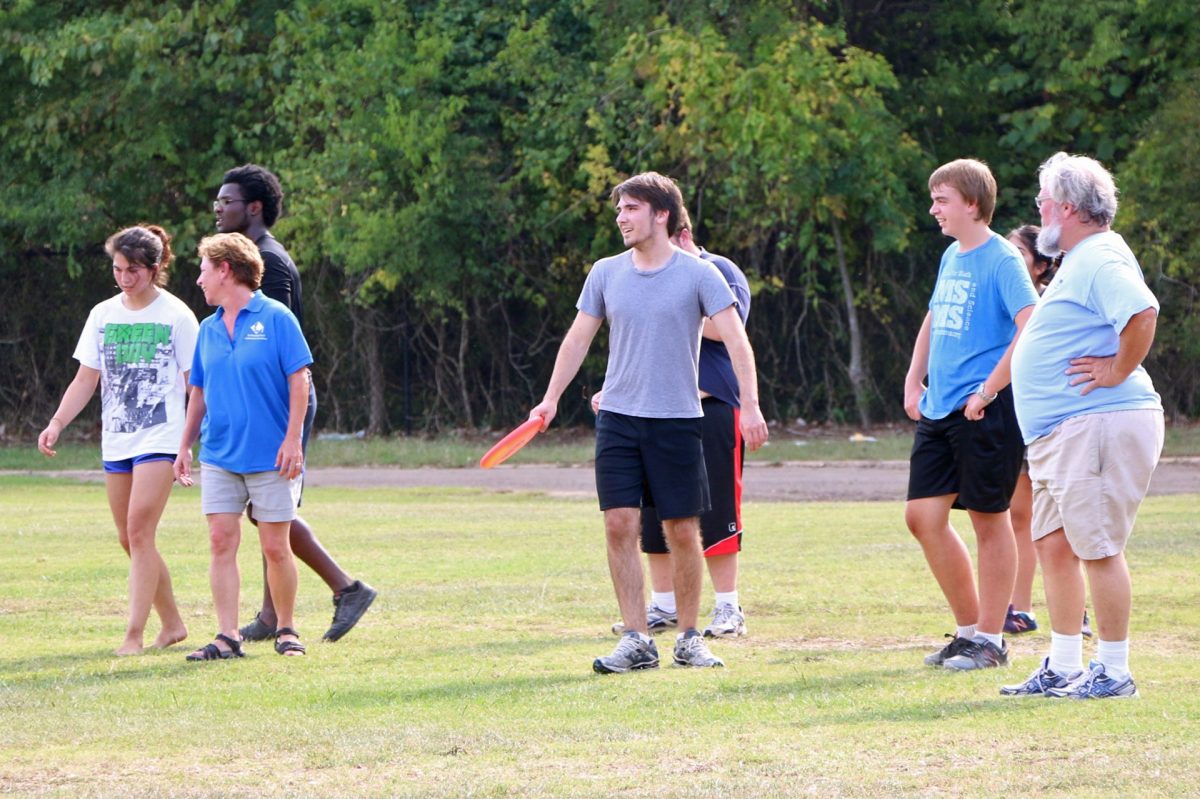
Years ago, ultimate frisbee filled that same role. The informal tradition was made possible through the support of biology teacher Bill Odom, but it faded when he retired alongside the disruptions brought on by COVID-19. Stevens said the sport was widely popular among students during its time.
“Everybody would play ultimate frisbee almost every day or several times a week. I don’t hear many people talk about ultimate frisbee anymore at all,” Stevens said.
These habits and daily routines have grown into lasting traditions that help shape campus culture and make the MSMS community feel alive. Although these unofficial rules and traditions are not written anywhere, they reveal just as much about student life as the handbook itself.