History is coming to life in MSMS instructor Kayla Hester’s U.S. History class, where students are producing papers and documentaries that explore the nation’s past.
Research under Hester’s guidance allows students to uncover deeper meaning behind what is taught in the classroom. For example, juniors Jaida Denz and Jordyn Taylor researched how PTSD affected veterans psychologically from the Vietnam War — a topic close to Taylor.
“My great grandfather fought in the Vietnam War, and he struggled with PTSD,” Taylor said. “That led my aunt to go into the psychiatric field, and she deals with PTSD patients.”
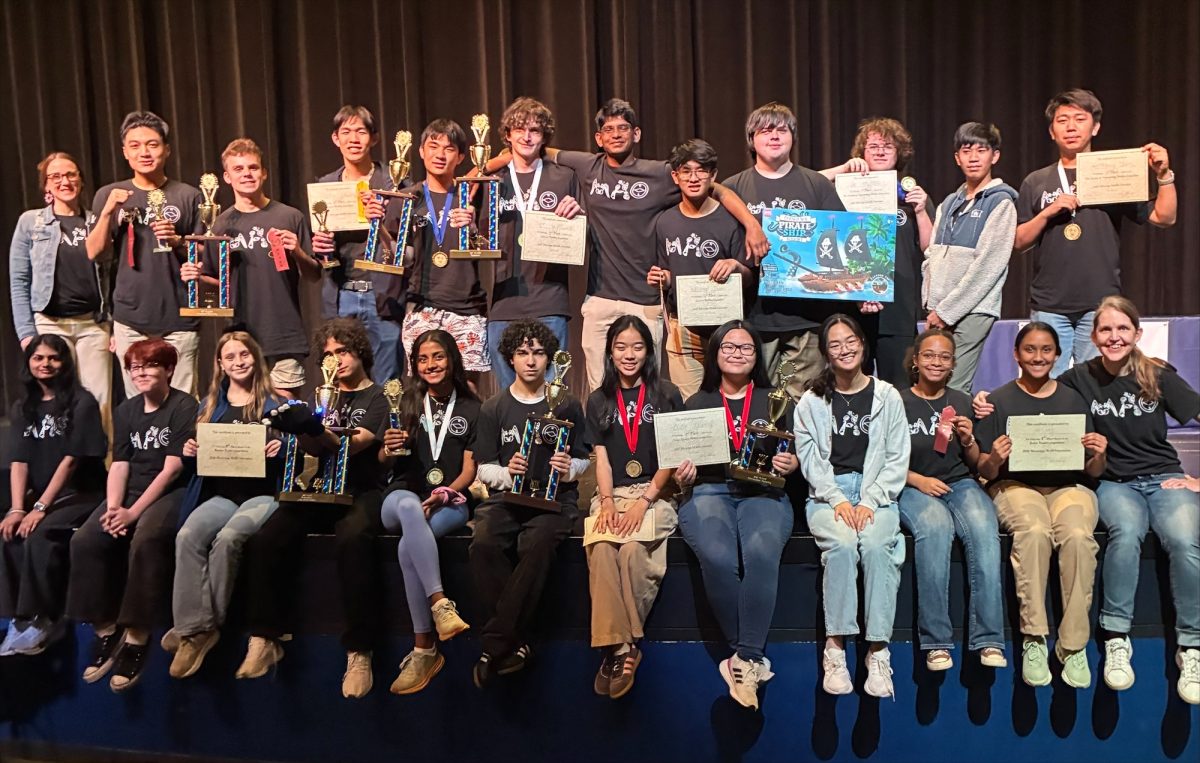
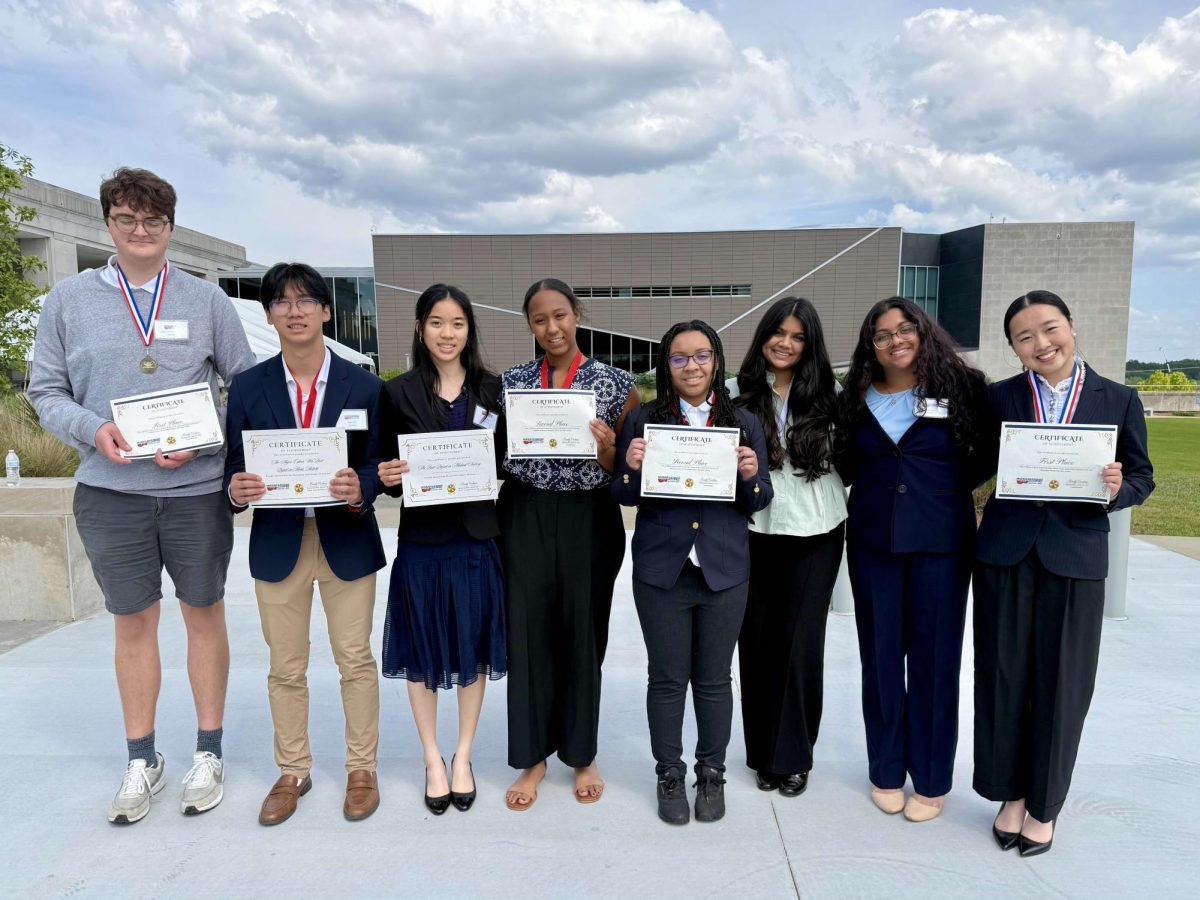
These stories were on display last month when eight MSMS students participated in the National History Day state competition on April 10, with five students advancing to the national competition at the University of Maryland on June 14-18.
Juniors Cathy Shao, Daniel Hu and Heer Patel placed first, second and third in the Paper category, respectively. Additionally, senior Walt Giesen placed first in Individual Documentary, while Denz and Taylor placed second in Group Documentary. Giesen, Hu, Shao and junior Angelina Tan earned special awards as well.
First- and second-place winners advance to nationals. Third-place winners serve as alternates if first or second place cannot compete.
NHD is a research-based competition in which students create an original project utilizing primary and secondary sources. Competition categories include historical papers, documentaries, websites, poster board exhibits or performances. This year, the competition theme was “Revolution, Reaction, Reform in History.”
Inspired by the Brown v. Board of Education Supreme Court case, junior Ananya Mantri wrote her paper on the history of the U.S. v. Bhagat Singh Thind. Thind was a South-Asian American immigrant who fought in World War I. He was promised citizenship after the war was over; however, the Supreme Court denied him citizenship because he was not white.
“It was a really important case for American history because it set the guideline on America’s idea of race and citizenship,” Mantri said. “It was around the time after the Chinese Exclusion Act, which was a really prominent part of U.S. history. It was a really eye-opening case.”
Hester said NHD allows students to become historians, developing essential research skills.
“You cannot fully understand the world we live in today without understanding its history. And by doing historical research themselves, students are empowered to take ownership over their understanding of the past,” Hester said. “Creating a NHD project takes a lot of time, effort and dedication. So, it is very gratifying to see students’ hard work pay off by advancing in the competition. I’m excited that our students will be able to showcase their research on the national stage.”