Amid a growing trend of teenagers deleting social media apps, a sampling of MSMS students said social media has negative impacts on their lives.
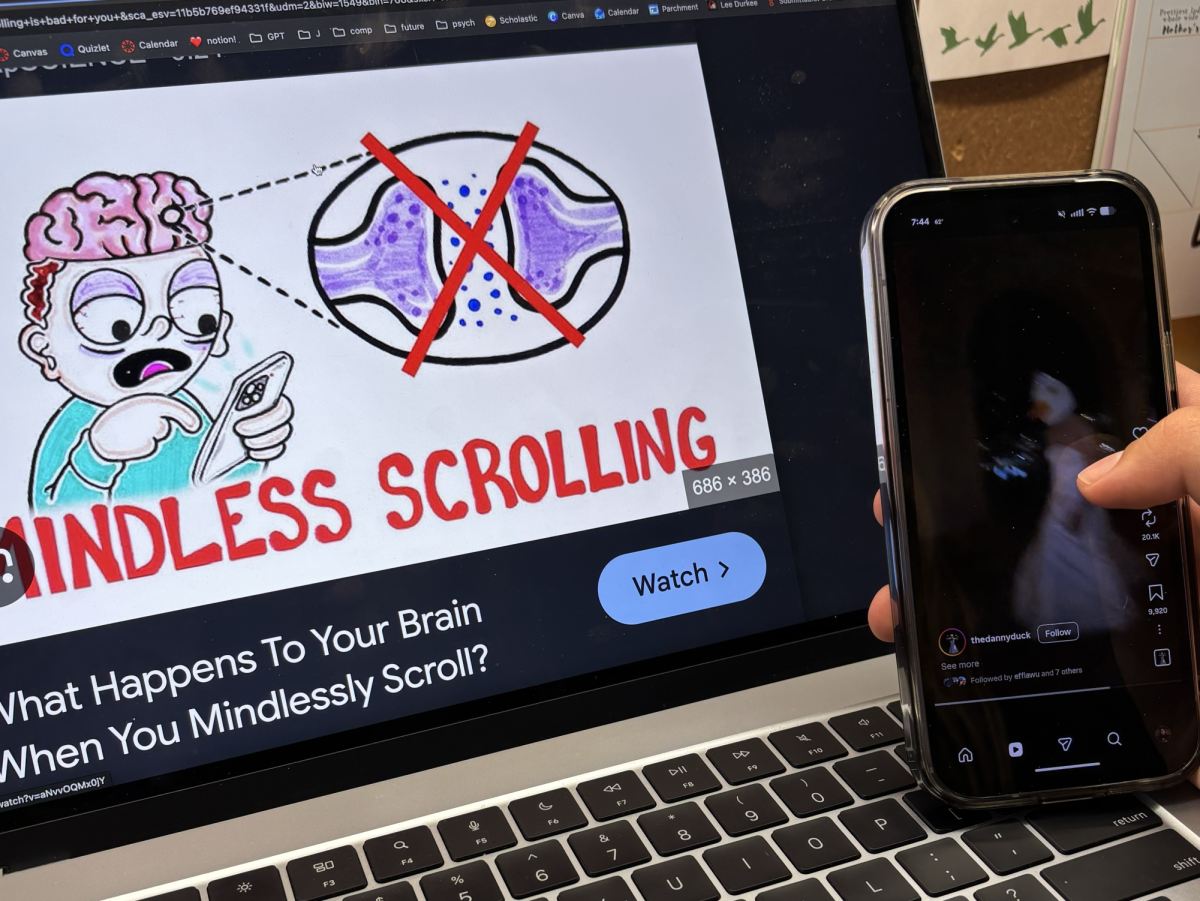
The movement among Generation Z to end phone addictions by deleting social media has been showing up in internet culture for years, resulting in the popularity of terms like “doomscrolling,” “brain rot,” “AI slop,” “touch grass,” “chronically online” and “chronically offline.” Ironically, these terms were popularized on social media.
Although deleting social media is a worldwide trend, many Generation Z individuals still use it for a multitude of reasons. Overall, MSMS students still use social media similarly to most teenagers.
The classes of 2026 and 2027 are the last completely Gen Z classes to attend MSMS. When polling 36 students, which is 15 percent of the classes of 2026 and 2027, 25 said social media caused them to “doomscroll,” which is scrolling for hours on short-form video platforms, and 34 students said they use social media for entertainment, with Instagram being the most used app. According to an article from the American Academy of Pediatrics, the most reported reason the average teenager uses social media is boredom, which matches MSMS students’ tendencies to use social media for entertainment and doomscrolling.
The same article stated, “the second most reported reason for using social media is for social connection,” and while this reason is third for the MSMS students polled, the second most common reason MSMS students use social media is for school.
MSMS students run various Instagram accounts to promote the school, clubs and teams. The number of clubs students are involved in at MSMS has resulted in many Instagram pages, and most of these pages are run by MSMS students. Even if certain students wanted to take a break from social media, they might not be able to due to these pages.
Using social media for school is not inherently bad. Similar to using it for social connection, it allows the MSMS community to stay connected and updated. For example, upcoming juniors often find roommates and suitemates through social media. On the other hand, social media can intensify the pressure that comes with attending a school with pressure around test scores and college admissions.
MSMS Counselor Heath Stevens said social media makes it easier for students to compare themselves to others, even though social media doesn’t show the whole picture of people’s lives.
“The biggest thing I see [at MSMS] is imposter syndrome,” Stevens said. “As a junior, it’s very common in the first nine weeks to think you’re the only one not getting it.”
Additionally, Stevens said there are two main topics he is familiar with regarding social media at MSMS: cyberbullying and mental health.
“We’ve had people suspended for inappropriate social media use here at MSMS,” Stevens said. “Associated with that, the people bullying and the people being bullied sometimes suffer mental health issues.”
SGA Secretary Aanya Banga, who runs the SGA Mental Health Committee, said social media use can lead to self-comparison, lower self-esteem and pressure to present a perfect life.
“For students at a place like MSMS, where stress is already high, social media can sometimes make things worse if it’s not used carefully,” Banga said. “It’s important to have balance and be aware of how it affects your mood and mindset.”
Eighty-three percent of MSMS students polled said social media affects their mental health in negative ways, and 56 percent said using social media increases their stress levels. This is similar to 48 percent of teenagers saying social media harms people their age in a survey conducted by the Pew Research Center.
These statistics matter because social media has created a different reality for Gen Z compared to every older generation. The digital world is a reality young people have had to navigate for themselves without knowing the real effects of being dependent on social media. Now, research shows a correlation between unregulated social media use and poor mental health.
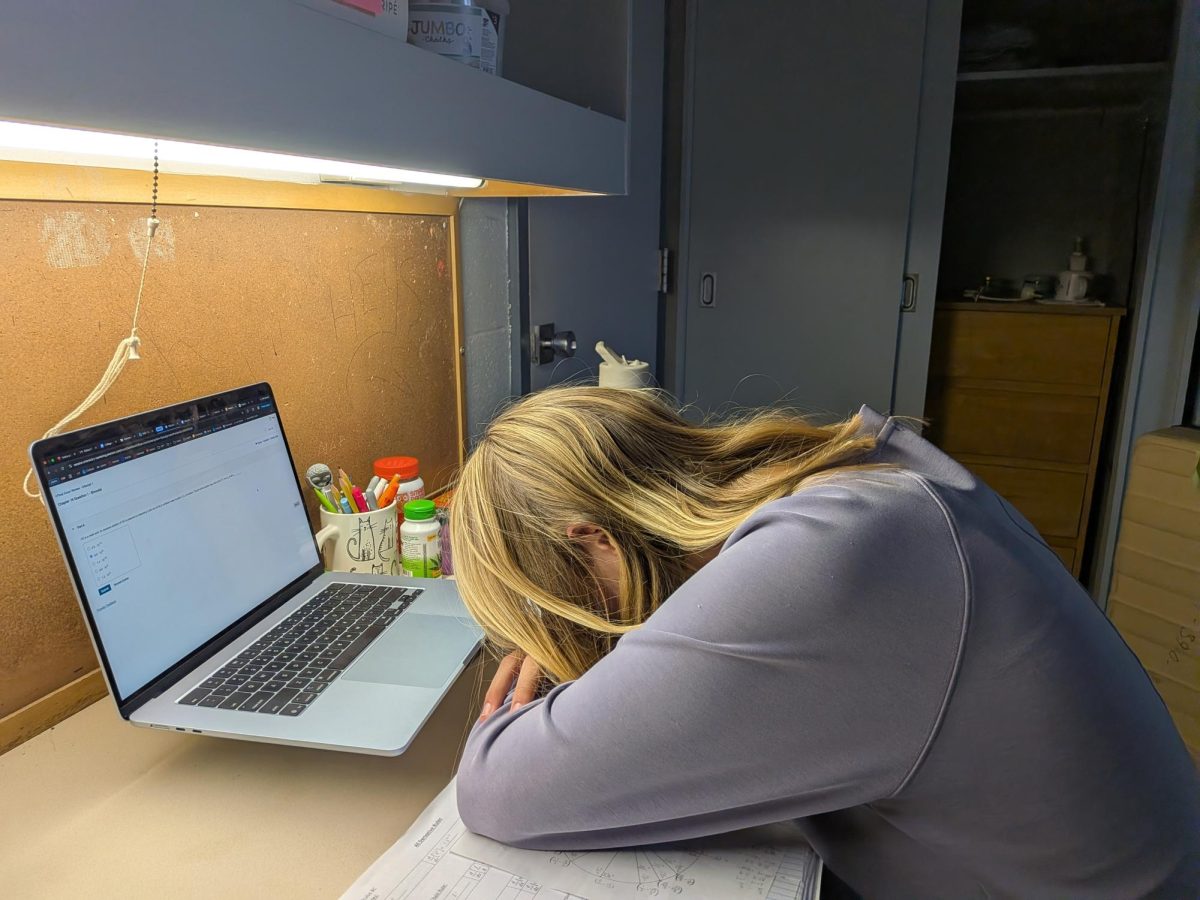
One of the most alarming causes of poor mental health is bad sleep habits. Forty-seven percent of MSMS students polled said social media causes a lack of sleep. A huge reason for this is doomscrolling.
Junior Daniel Hu said scrolling impairs MSMS students’ sleep and ability to study.
“A lot of MSMS students use social media as a way of relaxation, but a lot of times five minutes of scrolling turns into 30,” Hu said. “The distraction prevents students from doing their work and causes their sleep health to be impaired.”
The blue light given off by phone screens has been repeatedly proven to be the reason many people do not get enough sleep at night, and lack of sleep is linked to depression, diabetes and cardiovascular problems. According to an article from Harvard Health Publishing, a study found that blue light suppressed melatonin, a hormone essential to sleep, for twice as long as green light and changed circadian rhythms twice as much.
MSMS students already get very few hours of sleep each night from staying up studying and talking to friends. Completing schoolwork on laptops late at night cannot always be avoided, but doomscrolling can.
Junior Jaelyn Lister said she believes social media is harmful for all minds, MSMS students or otherwise.
“Connection is best made with the people surrounding you outside of the digital world,” Lister said. “And if someone is in a place where the digital world is their only comfort, they should look for ways to enter a new environment.”
Every student at MSMS has a bright future ahead of them, no matter the adversity faced with social media. Though it is easy to get caught up in busy schedules and try to escape by doomscrolling, MSMS students have great capabilities and opportunities to spend less time on social media and more time in the present.