

This school year marks a major shift in the curriculum of one of MSMS’s quintessential classes, Foundations for Higher Mathematics.
Traditionally a precalculus class for first-semester juniors that met four days a week, Foundations now covers concepts across algebra II, precalculus and trigonometry, and meets five days a week. The elimination of separate Algebra II and Trigonometry classes means juniors are tasked with covering topics previously taught across three classes in just one class.
The stated goal of the new Foundations curriculum is to guarantee all juniors take Calculus in their Spring semester, in theory boosting the odds of students taking advanced math classes their senior year.
Is this novel, fast-paced curriculum a net-positive for juniors due to its ability to change the trajectory of what classes students take down the line, or does it condense too much content into one semester? Well, we see it both ways. Here is our case both for and against the changed Foundations curriculum.
Affirmative
In the eyes of math faculty, what the Foundations curriculum in years past lacked was equal opportunity. While students could work their way into many advanced math classes, if they didn’t arrive at MSMS having tested into Calculus, it was not possible to take Multivariable Calculus their senior year, and students starting in Algebra II were at a significant disadvantage.
The faculty’s solution was to create a fast-paced class that would cover everything necessary for juniors to succeed in Calculus. Certain nonessential topics covered in last year’s Foundations like rose curves, polar graphs and semi-log plots were omitted and are now covered in the elective course Advanced Topics in Trigonometry and Precalculus.

While the increased course load may seem daunting, teachers assure students it can be done. If anything, Foundations teacher Lauren Zarandona said the pace of the course will not feel different for many students because they will be making up for what they were not taught at their home schools.
“There was a sense [last year] that the pace was faster than some kids gave it credit for. It depended on what they already knew,” Zarandona said. “We never addressed factoring last year in our curriculum, so if you were already solid with factoring, no big deal. If you didn’t know how to factor and your teacher was assuming you were factoring, you might have had double the work of a peer. This year was as simple as adding in a factoring lesson, so for that kid who needed that lesson, it’s a slower pace because they’re not having to learn it simultaneously.”
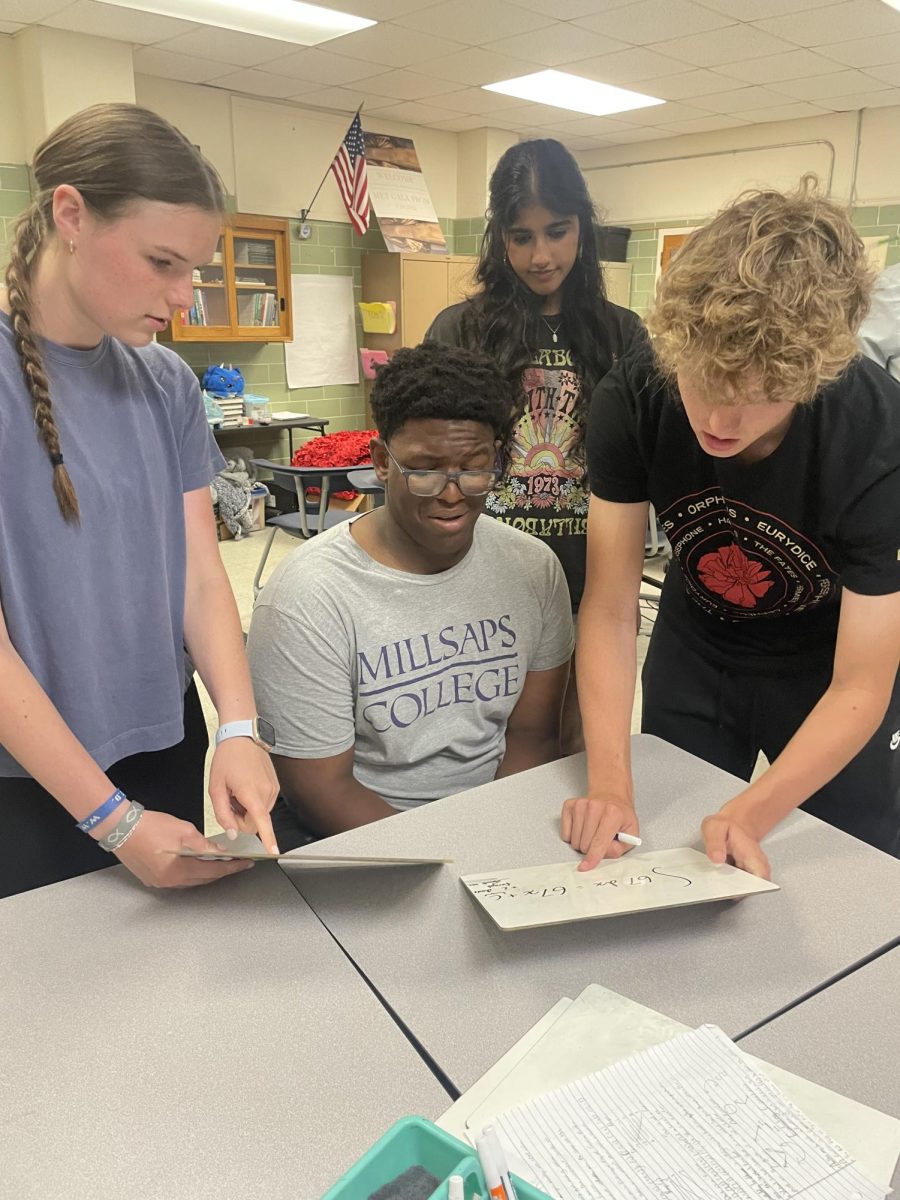
Even students who have prior experience with algebra II and precalculus find it beneficial to relearn from MSMS instructors. Junior Caspian Coughlin said even the review was filling in gaps in his knowledge.
“[The material is] explained a lot better, and we go into a lot more depth on it,” Coughlin said. “In my old school, we would get a brief overview, maybe learn how to do one or two processes. Here, we learn the entire thing.”
Foundations teacher Shae Koenigsberger said the fast-paced class will also allow students to immediately apply their precalculus skills in Calculus their second semester.
“They won’t have a whole summer to forget the unit circle or other key concepts. [With the old Foundations curriculum], you had a whole summer to forget all the graphs [from] Foundations,” Koenigsberger said.
Additionally, Koenigsberger said covering key mathematical concepts early on will help MSMS students in another common struggle — preparedness for physics classes.
“It’s going to help them in physics. Students that are taking [AP Physics C: Mechanics] a lot of times [are] currently in Calculus I while learning Calculus II material in their physics course. That has been an issue for years,” Koenigsberger said. “So, now all seniors will have had at least Calculus I and [can] be enrolled in Calculus II. It’s really going to help with the physics issue.”
The other aspect the Foundations instructors emphasized about the updated curriculum was the impact on students’ confidence and sense of competition. By guaranteeing juniors get into calculus classes in the second semester, Zarandona said students now learn in a more equitable environment.
“No one must earn their spot [in calculus] through their prior coursework. I think barriers that have mentally been in place for years are slowly coming down. We’ve lowered some of the competition and made it where everyone has one standard they’re reaching,” Zarandona said. “I think that’s going to change things more than anything else.”
Emphasizing an increased sense of equity in MSMS math, Koenigsberger said the inclusion of Algebra II into Foundations erases an unfair stigma she felt was formerly placed on students who began in Algebra II.
“I feel like sometimes students can be labeled as an Algebra II student here. It sometimes makes them feel not smart enough or not prepared enough, and they get that stigma attached to them the [years] they’re here. It’s been really cool to not know if [a student has] taken Algebra II or not,” Koenigsberger said.
Across the board, it seems, the potential for students taking the latest version of Foundations is endless. Not only are they on a more level playing field than years past, but, with only a few more hours of studying, they can supercharge their math education by taking even higher courses than previously possible.
Negative
Does an opportunity for excellence for some mean depriving other students of a choice in their education?
The new Foundations curriculum was instituted to allow every student to advance to Multivariable Calculus by their senior year, which is a major improvement compared to many other Mississippi schools offering Calculus I as their highest math course. That said, we must remind ourselves of the reality of Mississippi: High-quality education is as sparse as the rolling hills upon which rural schools lie.
The problem is not that every junior can take calculus, but that every junior must take calculus in their first year. The MSMS math faculty has historically assigned juniors to appropriately leveled classes based on their math placement test performance. However, starting this year, juniors are only divided into two tracks: Foundations or Calculus. Before this year’s change, juniors who complained to the math faculty about being placed in a lower-level course were promptly met with pushback from teachers who insisted their assignments were fair — so, what’s different this year?
Described by some as a math boot camp, Foundations has become one of the most intensive courses juniors face in their first semester.
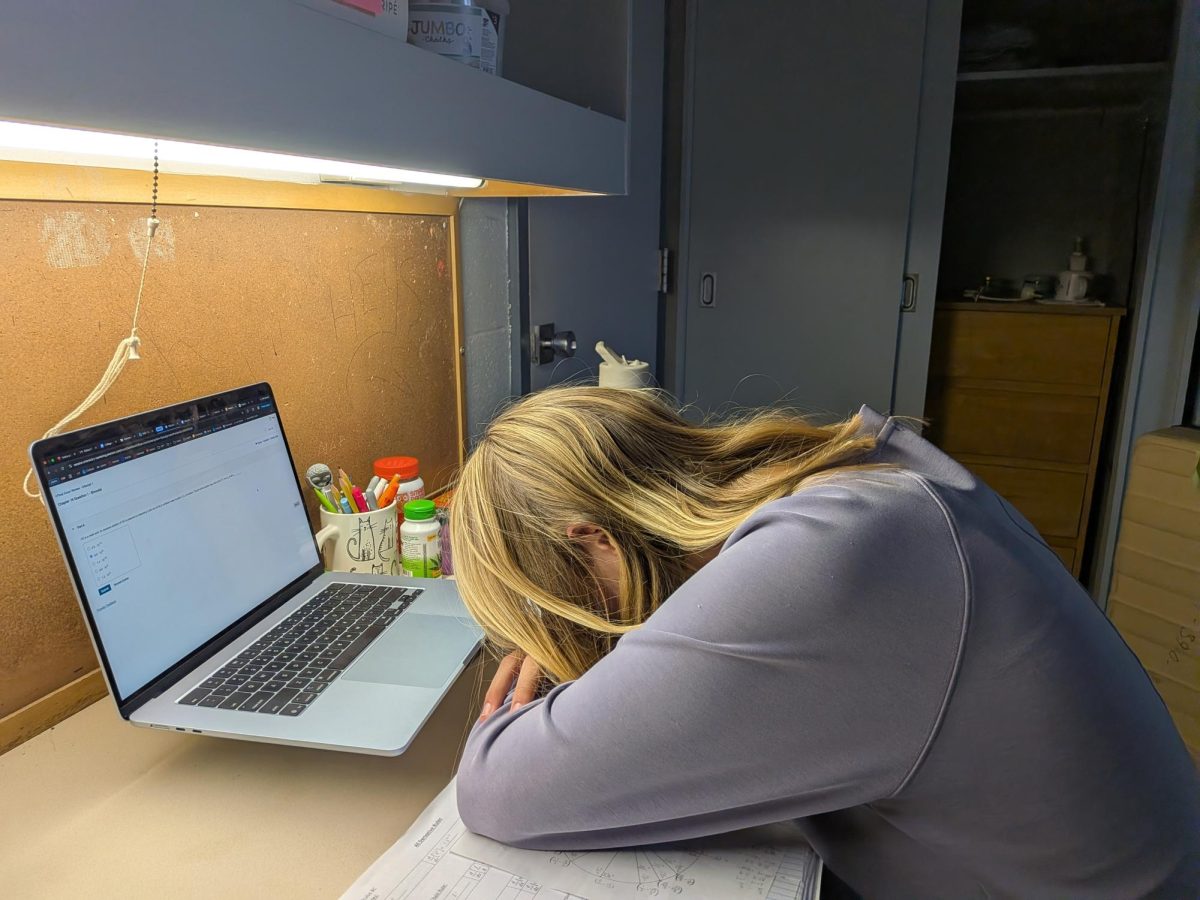
“Switching back-and-forth from [trigonometry] back to [precalculus] and then … having math every single day on top of our other classes is [an] … overload of work,” junior Adah Anderson said.
Even meeting five days a week, Foundations moves at a pace rapid for many students, especially those who have only taken Algebra I. Junior Beyonce Mendoza had only completed Geometry and Algebra I at her previous school but was automatically enrolled in Foundations.
“Foundations is a hard class to catch up on,” Mendoza said. “I do have to study back-to-back-to-back every night on it.”
Mississippi is severely limited in its choice of high schools catered to gifted students. Therefore, despite having “math” in its name, MSMS is the preferred destination for more than 100 students pursuing a variety of fields every year. MSMS students intent on non-math fields are required to advance at the same rapid pace as those pursuing math-related careers.
As well-intentioned as the new curriculum may be, students are stripped of the choice to tailor the difficulty of their schedules to their individual needs and future goals. A five-day-a-week Foundations class cuts into time students could spend succeeding in other classes they’re passionate about.

“I don’t have time to sit down because I spend an hour and a half on [Foundations], but then I still have my other six classes,” Anderson said. “I have seen where I focus more on this class and then won’t have enough time for the other ones.”
Anderson said the curriculum has taken a toll on her and others’ mental health.
“They put us at 100 times more than what we’re used to,” Anderson said. “We’re mentally struggling, we’re physically struggling and we can’t get what we need to get done because now our brain is moving too fast. We don’t even know where to start.”
The new Foundations curriculum artificially raises the pace at which students are expected to progress while maintaining the same performance, allowing some students to take previously inaccessible advanced math classes. However, it disproportionately burdens those with weak math backgrounds and unfairly restricts students who would rather invest their time in other fields of study.
MSMS faculty and administrators congregate each year to make changes to the school’s extensive course offerings, hoping to provide the promised “opportunity for excellence” for ambitious young Mississippians. The Foundations change is only a drop in a wave of curriculum innovations the school will make in the near future, the impact of which can only be assessed over time.
Editor’s Note: Wording was changed after publication to better represent the new Foundations structure and its students.