

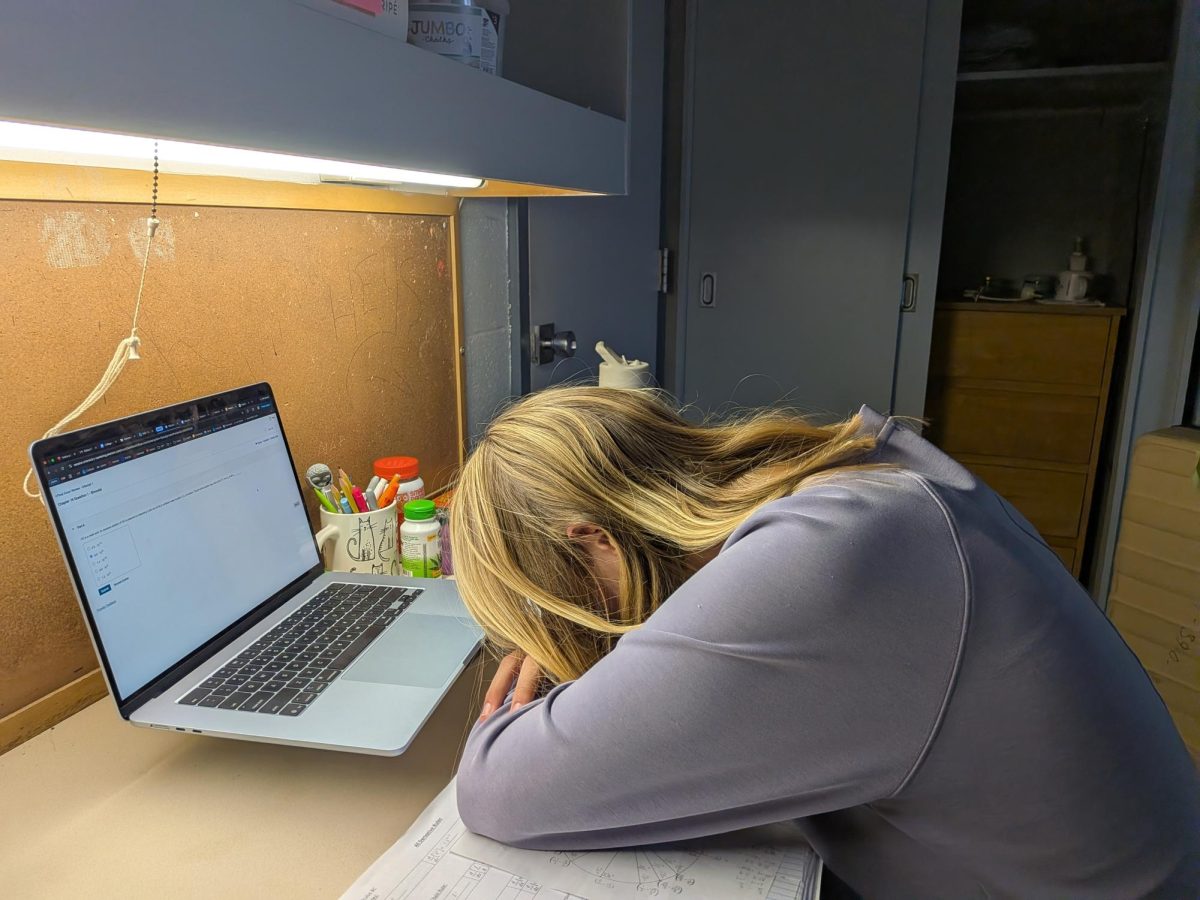
We have all been there: You stayed up too late last night, finishing up that essay you totally forgot about. Exhausted, you roll out of bed and grab the ice-cold energy drink conveniently sitting in your fridge and problem solved. You’re awake for the rest of the day, with 200 milligrams of caffeine pumping through your system.
Except, did it really solve the problem at all?
Across the U.S, teens are reaching for caffeinated drinks seemingly as often as they do their phones. On average, teens aged 13-17 consume around 159.5 mg of caffeine daily, with energy drinks making up a notable 12 percent of that.
At MSMS, where harder academics and living away from home create long nights and early mornings, it’s quite common to see a coffee cup or energy drink in almost everyone’s hands. What many students don’t realize is caffeine isn’t just a little pick-me-up — it’s a drug, and its usage has lasting impacts.
Caffeine stimulates the central nervous system. When you have that morning coffee or energy drink, the chemical increases the activity of your neurotransmitters, increasing energy and exciting your nervous system.
According to pediatricians from the American Academy of Child & Adolescent Psychiatry, teens aged 12-18 should consume no more than 100 mg. That is roughly one 8-ounce cup of coffee, and around half of an average energy drink.
The benefits of caffeine — quick energy and alertness — can seem helpful, and for a short-term they are. However, the long-term effects on a young person’s body can be extremely negative. Studies from the National Library of Medicine conclude consuming energy drinks can lead to cognitive and physical complications, although it can vary from person to person. Extreme amounts of caffeine and energy drinks can lead to tremors, depression, tachycardia and other negative health problems.
Another major negative to caffeine is disrupted sleep. A study from Stanford University found caffeine actually does the opposite of what we need it to. Despite it keeping us alert for a few hours, it actually affects how well we sleep at night. This leads to a cycle of exhaustion, creating a need for caffeine every day. One might call it a caffeine addiction.
Despite the constant focus on balance and wellness from MSMS faculty, residence life and staff, energy drinks and highly caffeinated beverages are still sold in dorm vending machines and found across campus. On one hand, students are told to prioritize health and sleep. On the other, we are surrounded by products that promote the opposite idea. It sends a mixed message.
Now, this isn’t to say banning or removing energy drinks entirely from MSMS is a good idea. In Poland, where energy drinks were banned for anyone under 18, nearly half of teens reported the ban didn’t affect their energy drink consumption at all. This shows rules alone don’t and can’t change behavior.
In the end, consuming caffeine is a personal choice many people make every single day. No matter how much schools, teachers and even governments interfere with that, people will still find alternatives. Rather, it is important for us as students to realize how much caffeine can impact our daily lives. Most people are guilty of the occasional late night chased by a large amount of caffeine, and that is okay.
Yes, it is important to finish that reading for class tomorrow or finish writing up that lab report. But it is even more important to slow down, sleep and welcome the next day without a copious amount of artificial energy. Energy drinks might keep you awake for a test, but they can’t carry you through life.










John Broome • Mar 10, 2026 at 4:47 pm
Icl, they are 100% worth it 😂