

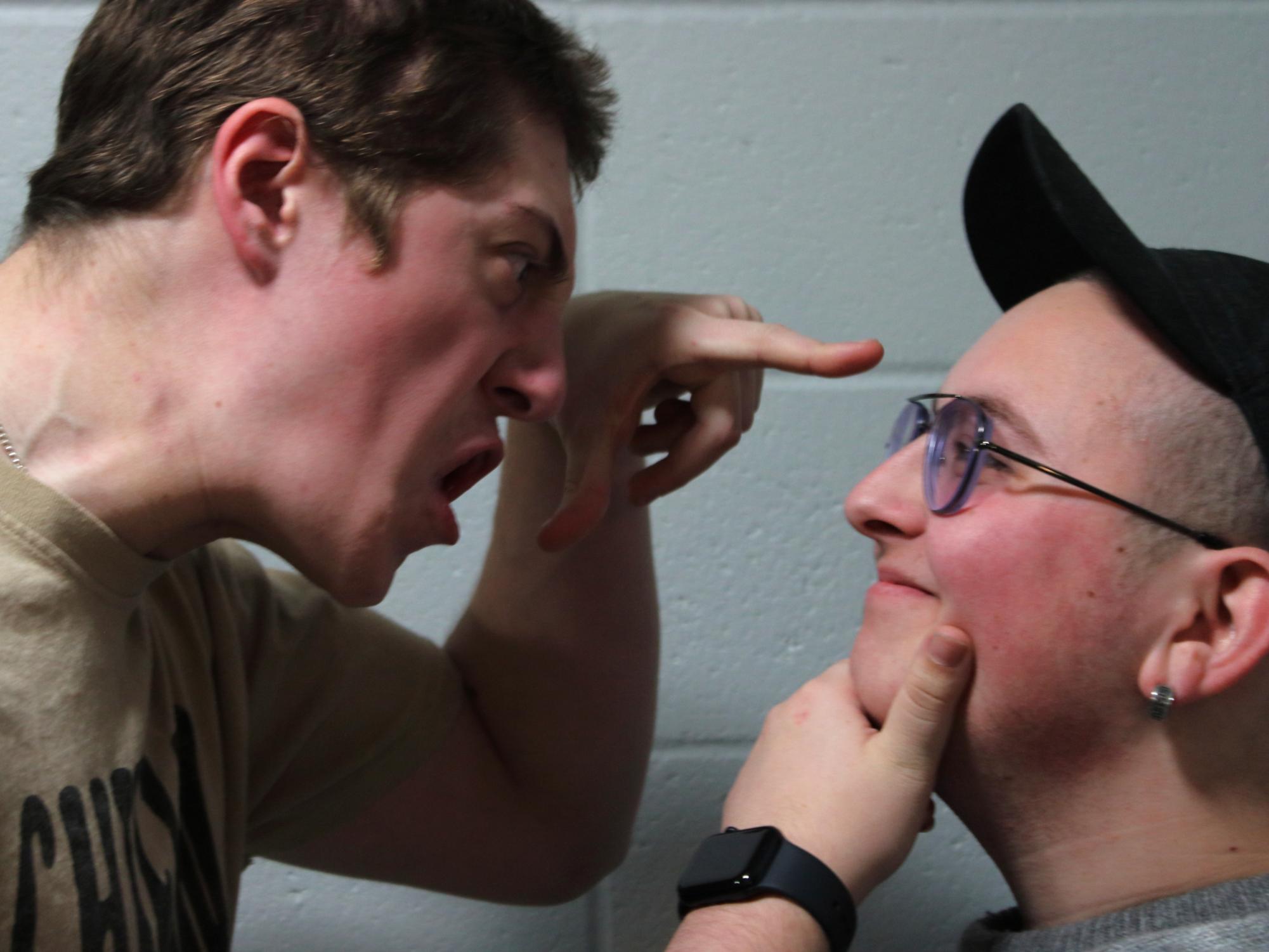
What if instead of someone saying Charlie Kirk was an innocent man who was murdered in cold blood, you heard them say he deserved what happened to him?
How does that make you feel?
Extreme reactions emerged the afternoon of Sept. 10, when Kirk, a controversial political influencer, was shot and killed at a rally in Utah. His sudden death created massive outrage, with almost every news platform and social media influencer having something to say or post online.
Controversial opinions seem to be all anyone can talk about online, whether it’s something simple, including what color the definitely-black-and-blue dress is, or more seriously, namely Kirk’s assassination.
It’s no wonder why.
Algorithms influence strong emotions such as fear and anger. With social media platforms, such as Instagram and TikTok, being monetized, those emotions mean more clicks, and more clicks mean more money. That is where rage-bait comes in.
Rage-bait, as defined in the Merriam-Webster dictionary, is “content that tries to provoke anger or outrage, as a means of gaining attention or making money.” It can also be a verb; “to rage-bait” is to intentionally say or post something offensive or shocking to spark a reaction. Rage-bait is a content creator’s not-so-secret weapon.
The problem isn’t rage-bait’s existence; I’m sure everyone has enjoyed a few heated online debates or rage-baiting a friend — I know I have. No, the problem lies in rage-bait actually working.
Social media algorithms reward engagement, not truth. Whether it’s a like or an angry comment, every interaction with a post boosts its visibility. A study from Yale University finds that users who receive more engagement for expressing outrage are more likely to post outrage again, almost as if social media platforms train us to be angry.
Those emotions don’t stop online. The same tactics are appearing in politics, classrooms, the real world and especially on the news. Every story is breaking news; every headline framed to make us react. It seems almost impossible to escape some form of content whose main goal is to make you angry — an endless cycle.
That can get overwhelming, especially for high schoolers. Between classes, homework and extracurriculars, it seems really easy to pick up a phone and disappear into the online world. But that time spent online can actually cause more problems than you think. Research shows negative content spreads quicker and wider than positive content, possibly amplifying anxiety and irritability among users.
When everything online is designed to emotionalize viewers, it often feels like genuine conversations are hard to find. Even the word rage-bait has lost its meaning, being thrown around seemingly anytime someone disagrees with you. If someone has a strong opinion in class, it can feel like the first reaction is to be angry instead of trying to discuss it. Often, it feels as though controversial discussions are impossible to hold. They are constantly shut down and ignored due to the negative reactions they bring. It limits the chances high schoolers get to learn and grow from their peers’ perspectives — one of the most important parts of education.
This overuse of rage-bait is dangerous. When we become so desensitized to the word, we risk losing the true definition and being able to see what it does to us. We also risk losing our ability to see past what is online and to think critically about a situation without becoming angry or dismissing it.
A lot of this isn’t new. Tabloids and media outlets have relied on shock value for decades, and the word rage-bait comes from an earlier term: clickbait. The problem lies in the fact that we see this information so much quicker. The world is at our fingertips, and that isn’t always as good as we’d think.
While it may seem harmless to argue online about something so seemingly unimportant as rage-bait, there are real effects. Studies have linked excessive outrage-based content to an increase in anxiety, stress and emotional fatigue, all of which can affect focus, motivation and even academic performance.
It would be unrealistic to say negative emotions should be removed entirely from the internet; that is just not possible. After all, outrage and anger can be an important motivator in standing up for what you think is right. But we can’t ignore its use — and misuse — for profit and engagement.
It is significant for high schoolers to question what they see in the media. Stop and consider why a post would make you angry, who would benefit from that anger and if it’s really worth it to be angry.
At the end of the day, rage-bait is just another word to describe something humans have been doing for a very long time: taking pleasure in annoying someone else. I’m sure those of us with siblings understand that feeling well. The problem doesn’t lie within the small daily interactions and anger but instead the algorithms and emotions tied to them.
The internet may run on emotions, but it is important to remember we don’t have to.








johnth3don • Dec 9, 2025 at 5:10 pm
You bring up some good points, but I don’t think your comparison lands too well. JFK and Lincoln’s assassinations are historical events with decades of context behind them while Kirk’s assassination was less than 3 months ago. Still a bit taboo, imo.
Also my first comment was lowkey rage bait itself.
John Broome • Dec 9, 2025 at 4:28 pm
Personally, I do not think that it is appropriate to use Charlie Kirk’s assassination as a lead in to explaining “rage bait.” Good read though!
Kelsi Jaher • Dec 9, 2025 at 4:44 pm
Hoffman is arguing that instead of being treated with respect and solemnity — like it should’ve been — news outlets and social media began using Kirk’s death as a “hot topic” to gain views. For some on social media, that meant “rage-bait” style content. It doesn’t disrespect the assassination in any way, but relates it to the topic to make the content recognizable to the reader. Would it be inappropriate to use JFK’s assassination as a lead into a discussion of how conspiracy theories about the government form? Would it be inappropriate to use Lincoln’s assassination as a lead into a discussion about post-Civil War conflicts?I think we need to make sure we’re not self-censoring just because the subject is grotesque and disturbing.